
ChatGPT at the death. Literally.
How AI helped me think clearly while my father was dying.
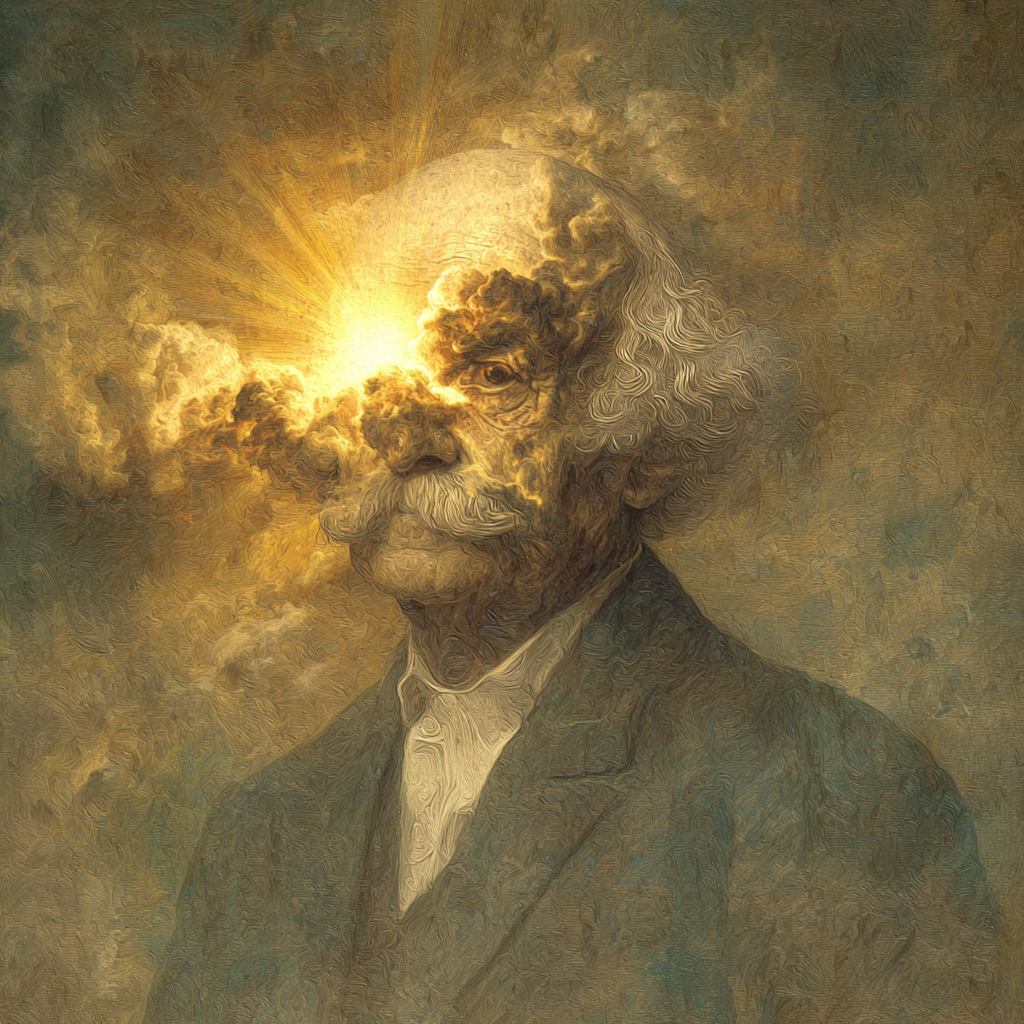
My father was dying. I needed help thinking clearly. So I asked ChatGPT.
It’s tough being a tech bro in the modern world. First of all, I am a changing man, prone to radically different points of view from one moment to the next. I am inconsistent, indecisive. A scatter-brained daydreamer. Privileged; ultra-processed; a product of a shifting environment.
But you can call me Ken.
Sometimes I walk out my front door and the rubbish fly-tipped onto my street feels like a dark cross against every life decision I have ever made. Is this where I live? Has everything come to this?
Sometimes I step out of that same door and see angels in the sunlight piercing through winter clouds. Life is good. I am full of love.
I hold a sense of what is right, of the man I want to be; of the world I want to help create, but sometimes, just when I need it most, it slips right through my fingers. I cannot always trust my judgement. I cannot always say whether I am being true to myself, or not. And through this mess I must make decisions.
Like: what should I do about my dying nonagenarian father, living alone?
Should I respect his agency and independence, or force help upon him? Does he know I love him? Do I love him enough?
These thoughts require seriousness, single-mindedness, consistency, narrative. When the stakes are so high, I cannot trust myself to deliver these qualities.
So who can I turn to? My non-judgemental, generically predictable, consistently positive companion ChatGPT of course. No real person could do this job, because there is no real person to whom I could say what is actually on my mind, which is something like this:
no fuck no is that dried shit on his sheet it looks like a burn mark please be a burn mark its clearly shit and god know how long it’s been there no wonder he’s sleeping on the sofa does he ever get off the sofa does he eat is he just pretending to be OK for my sake do I even want to know if he’s not should we just put him the care home and ask for permission not forgiveness but when he talks his eyes are so bright HE’S ALL THERE that same beautiful endless mind who am I to take away agency and freedom what if he lives long enough to burn through all the money on care and bankrupt us does he know he shat the bed should I tell him how should I tell him can we get homecare do we have to pay death is with us everywhere we go waiting all the time can utility companies come for his bills after he dies how can we get him to take his meds should we even try his legs are hanging weirdly off the sofa on his bed is he asleep IS HE DEAD well if he is there is an open book next to him and I am here with him and this would be a perfect time to go no he’s up he’s not dead but he can barely breath and he will just keep on pretending or deluding himself that he is OK do I want him to die am I evil
This is not a a quick chat over a nice cup of tea. These are not feelings I can convey with WhatsApp emojis. This is me, on the brink, not even sure enough of my own thoughts to share them. ChatGPT cannot tell me what to do here. But it can help me understand what I think.
It can order my thoughts into something coherent. It can reassure me that I am an ordinary man dealing with a stressful situation. It knows I am not evil, and I choose to believe it.
It can also tell me, with reasonable accuracy:
how medical terms translate into plain English;
what palliative care actually means;
how the NHS triages end-of-life decisions and allocates funding;
what questions I should ask the consultant;
what the end of life really looks like;
which decisions I must make immediately and which I can defer;
whether I should tell my dad he has hours or days left;
how cremation works;
what a funeral service consists of;
whether non-believers can have funerals in Christian churches;
the non-linear nature of grief;
how probate works;
how to act as executor of a will.
And so on.
ChatGPT was there near the end, and after the end. Doctor, nurse, lawyer, therapist, counsellor, confidante. Not a friend — because only my friends are my friends. But one hell of an assistant.